Problem
Family-run Martin Farm grows crops on a mix of owned and leased land around Courtland, Alabama. The lease agreements are based on a number of different rent structures: cash rent, share rent or flex-cash rent. Because of this mix of rent structures, accurate records have to be kept for each field in order to calculate the exact amount owed to each land owner.
Solution
Martin Farm was one of the first farming operations to implement a digital record keeping solution, first in MS-DOS in the 1980s, and later on in a number of different software suites. Since 2018 Martin Farm has used Agworld for recording all their in-field activities and communicating this information between the farm and the office.
Result
The visibility created by having their field-level data all in Agworld allows the Martin family to quickly create share-rent and flex-cash rent reports, taking less than half a day, when it used to take a week. Through Agworld’s PowerBI integration, the Martins are also able to let the field data help them answer specific management questions through data-driven insights on topics such as: projected input usage, historic and projected gross margins, and cost details by field.
Early adopters of technology
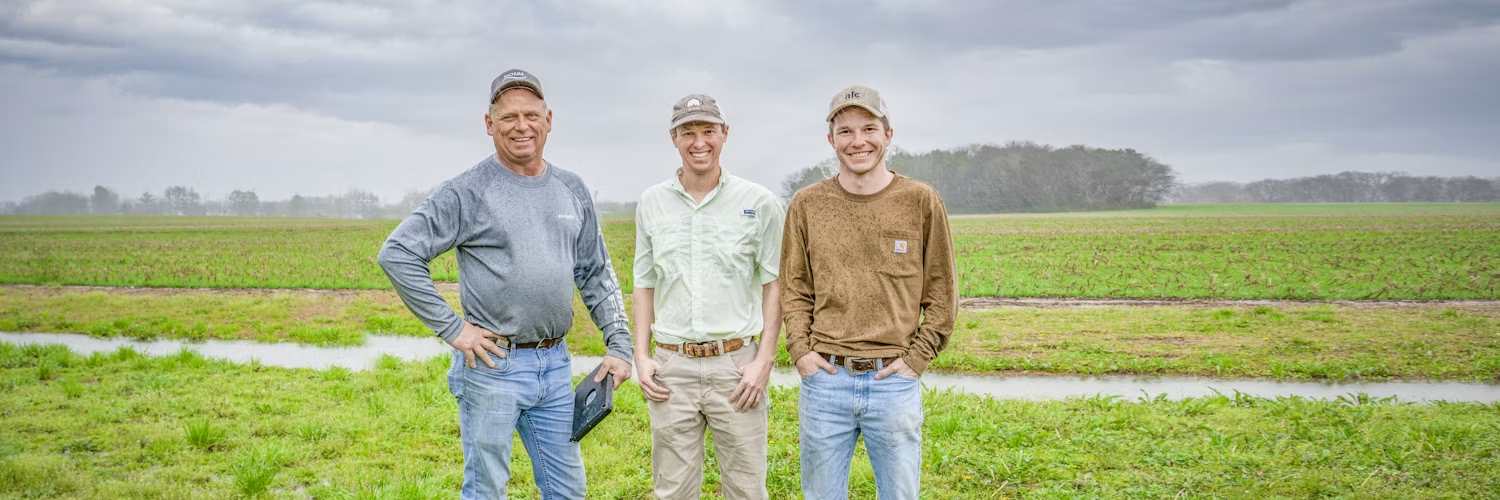
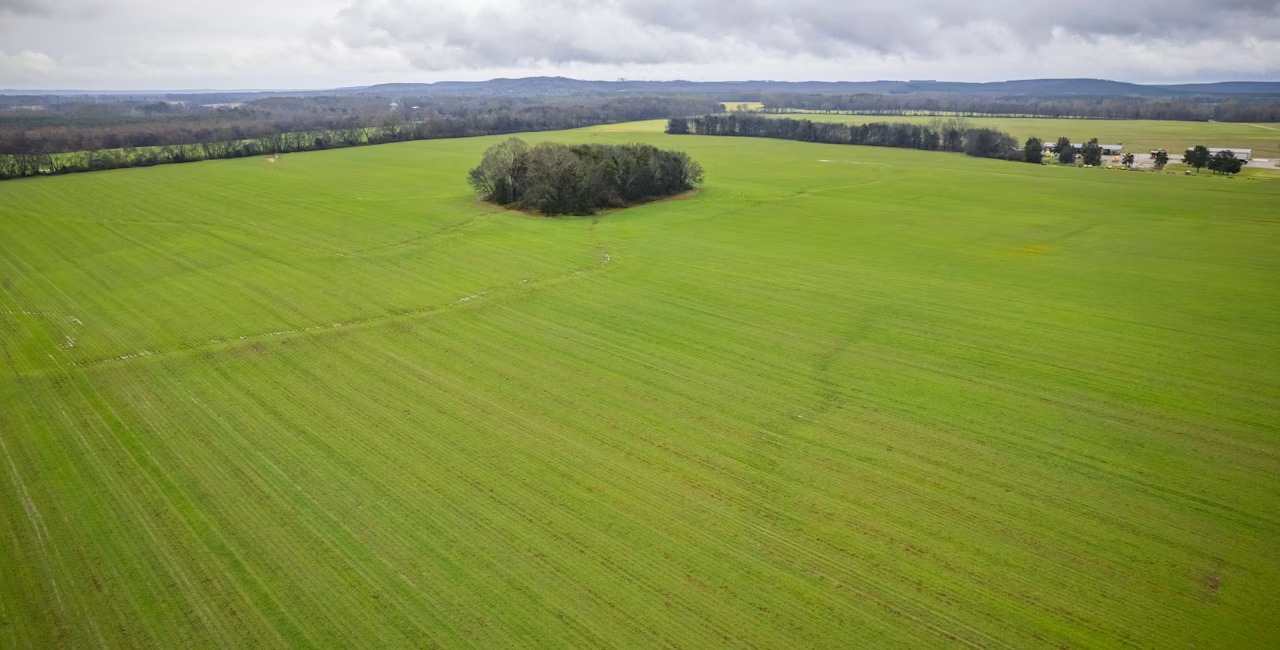
Martin Farm has been in operation in the Courtland, AL area for close to 200 years, with seventh generation farmer Larkin Martin currently at the helm of the family business. Larkin, together with son Stuart Thornton and 8 employees, grows a rotation of corn, cotton, soybeans and winter wheat on a total of 7,500 acres, consisting of both owned and leased land. With soybeans double cropped into winter wheat, the total number of farmed hectare per year often exceeds 3600 hectares, explains farm manager Robbie Nicholson: “We have tried a number of other crops such as peanuts, canola and sorghum over the years, but we find that the current rotation works best for the way in which we run our operation.”
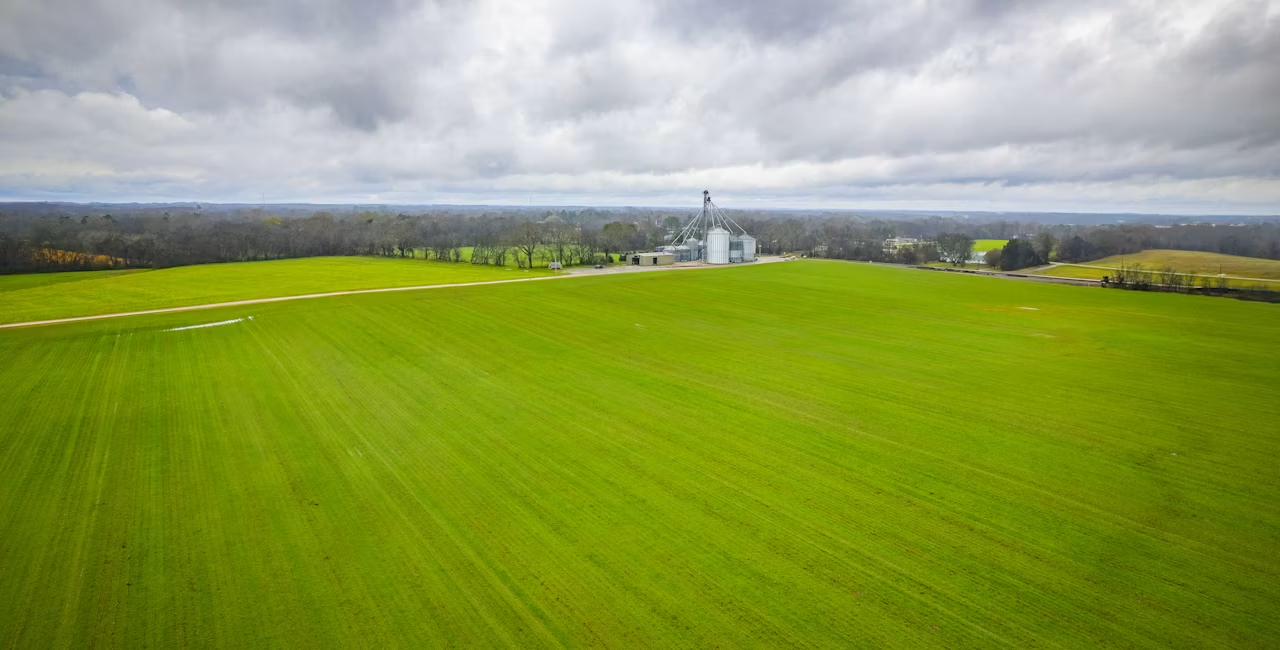
Robbie, who uses Agworld together with his colleagues, continues: “Agworld helps us keep track of our rotation by allowing us to better visualise our current cropping plan. This allows us to better plan our movement of people and equipment among and around our 4-crop mix. We can also see exactly which products we’ve used and how much they’ve cost at business, farm and field level in Agworld - this is very important to me as it enables me to optimize our farm management.”
When Larkin moved home in 1990 to join the family farming operation, her father was already using a rudimentary DOS-based record keeping system that he had custom built. Larkin: “We have used a number of different systems since the 90s; all of them had the same purpose, to keep field-level records, but they’ve all functioned differently. We wanted to switch away from the system we were using at the time in 2018, and have been using Agworld ever since. Having a data management system in place is important for us as it helps us to accurately record information and communicate that between the farm managers and myself, as I spend most of my time on the business side of things.”
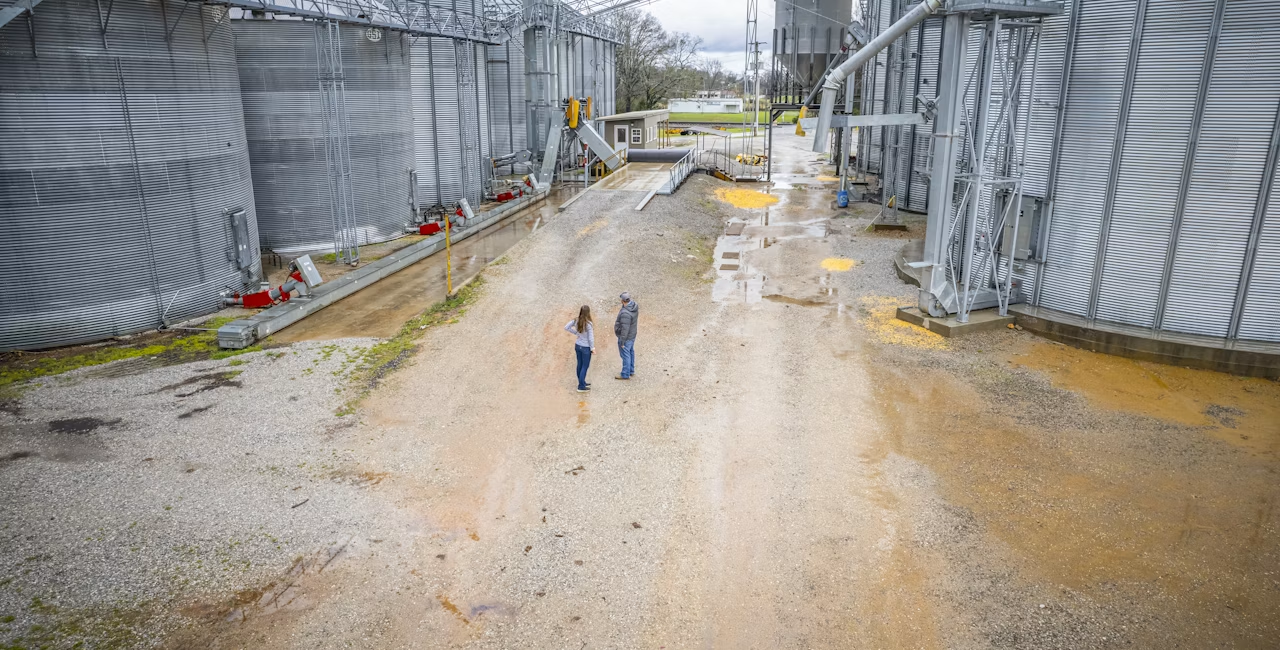
Larkin adds: “Agworld is really designed so that the whole farm management team can interact with the software in ways that are specific to their responsibilities. Whether they are in the field or in the office, they are able to each enter the information that builds the whole picture, and also visualise or extract information that was input by others. Because of this, Agworld really helps the business overall.”
Share rent calculations
Martin Farm owns part of the land they crop, and leases the rest from a number of landlords with a mix of rent structures. Cash rent, share rent or flex-cash rent are the three options used by Martin Farm says Larkin: “Straight cash rent is obviously the easiest to calculate as we owe those landlords the negotiated amount of money no matter what happens, but this also means that they don’t share in any of our risks or rewards. Share rent means that we owe the landlord a percentage of the income crop, say 25% for example, but they owe us a percentage of certain inputs we use; so 25% of the fertiliser bill for example.”
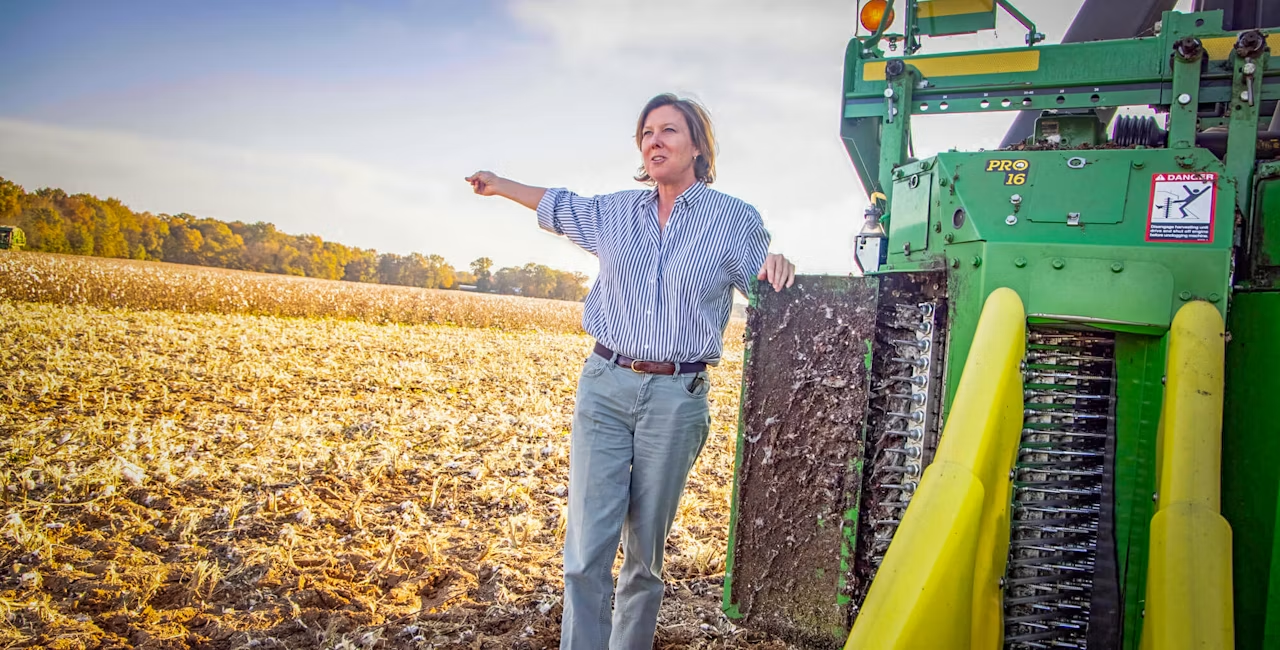
Larkin continues: “The third rent option is called flex-cash rent, which has a cash-base rent plus a bonus that depends on the profitability of a field in that year. It’s easy to see why we need very detailed record keeping for both the share rent and flex-cash rent options, as the calculations for these rent amounts are all derived from the inputs we’ve used and the results we’ve achieved. We find that Agworld makes a big difference for us here, as it used to take us a couple of weeks in November to do all these calculations, and last year with Agworld it just took my son Stuart one morning to complete it all.”
Stuart adds: “The only thing we do before printing our share-rent reports is a series of accuracy checks to make sure that somebody didn’t enter two gallons instead of two fluid ounces for example, just the obvious stand-out errors that are easy to find. After that, it’s a matter of spitting out the reports and that doesn’t take very long at all. Instead of sitting there weeks on end trying to create these reports, our farm managers enter the data in Agworld throughout the season, after which it’s easy for us to use for a variety of purposes - share rent calculations being a very important one.”
Utilizing field data
While share rent reports are an important result of Martin Farm using Agworld, the field-level data is used for different purposes as well says Larkin: “We have chosen to utilise Agworld’s Microsoft Power BI integration package, which allows us to create customized dashboards and the ability to export any data we want to analyse into a pivot table in Excel. Our farm managers do all the hard work when it comes to Agworld - they enter the in-field applications as they occur on a daily basis. Because they are so diligent with that, and with Agworld’s structured data setup, we are now empowered to easily answer any management question that might arise throughout the growing season.”
Stuart: “Standard PDF reports only allow you to answer certain questions, and manually having to create spreadsheets to combine multiple sources of data can take days to complete. When my mother needs to know something specific on a field level, like how much fertiliser we’ll need if we plant 1200 hectare of corn next year, I can export Agworld data through Microsoft Power BI to excel in less than 5 minutes and provide an instant answer. I had not done much work with pivot tables previously, but it didn’t take me very long to become familiar with the process and get quick at it.”
Larkin concludes: “Every farm management software has areas that could be improved, and Agworld is no exception, but to me right now it’s the best solution available in the market. Agworld provides a level of vizibility and insights to our farming operation that we didn’t have previously and, although our farm managers still have to spend time entering the data, it is a lot quicker and easier in Agworld than it was in our previous solutions. Being able to use that field level data to help with share rent calculations, or to answer any management question at any point during the season, makes it easier for us to get the best possible results out of our farming operation.”
