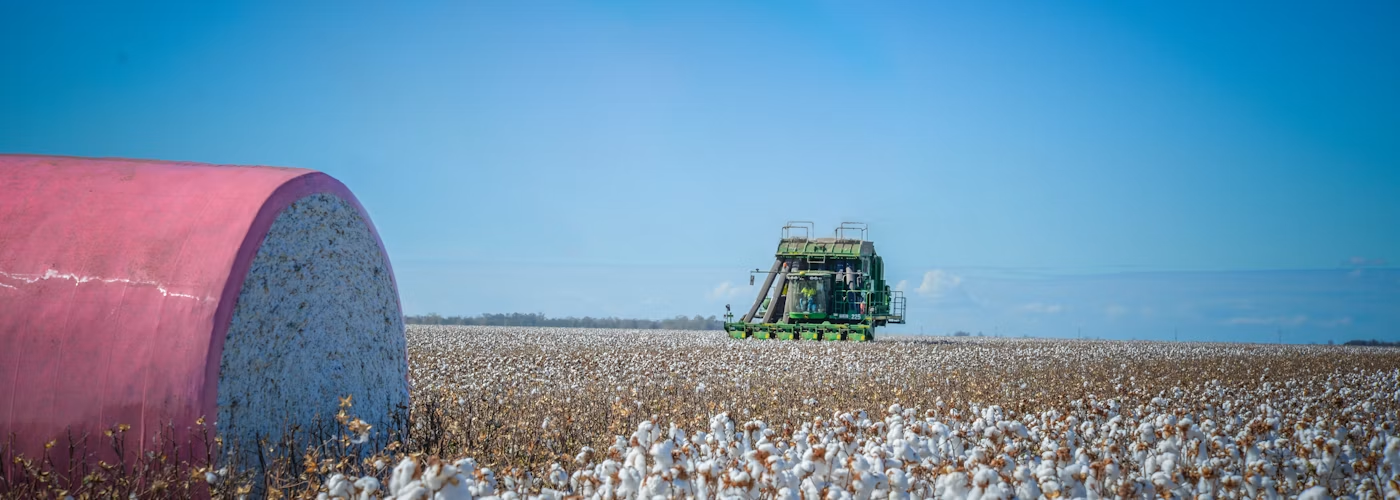
Diesel is top of mind for every cotton grower right now, and not in a good way. Prices are high, volatility is real, and for many it’s a sharp reminder of something we already knew but didn’t fully act on: when inputs are critical to your operation, you can’t afford to think short-term.
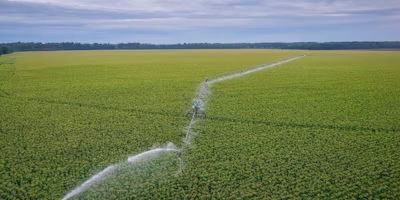
Talk to any grower today and you’ll hear the same hindsight: we should have had more storage, locked in supply earlier, built a buffer when prices were lower. Because once you need diesel, when the planters are rolling or the pumps are running you don’t get to wait. You pay the price, whatever it is.
There’s a parallel here that doesn’t get talked about enough: data.
Farm data is increasingly the diesel of modern agriculture. It guides decisions, drives efficiency, and underpins everything from sustainability reporting to input optimisation. But unlike diesel, you can’t just go out and buy farm data when you suddenly need it. If you haven’t consistently been collecting data, accurately, and in a structured way, you’re already behind. And just like diesel, the time to prepare is before you urgently need it.
Some growers still treat data as optional, something you can just tidy up at the end of the season, or only for compliance. That mindset is quickly becoming a liability. When conditions shift, whether it’s input costs, water availability, labour, or market scrutiny, those growers in control of their data are the ones who are able to respond fastest and use the information to their advantage.
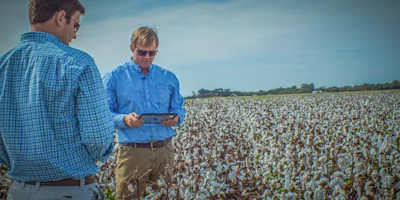
These growers know which inputs went into each field, what it cost, and what it returned. They can compare seasons, adjust their plans, and work closely with their agronomist using shared, up-to-date information. Growers without this data are left reconstructing records, digging through notebooks, and piecing things together after the fact.
That’s the equivalent of organising diesel delivery the day you run out. But the flip side is where the opportunity lies: this is your chance to get ahead. Because unlike diesel, where timing the market is difficult, building your farm data is something you can start today, and benefit from straight away. Every season you invest in better data capture strengthens your operation for the future.
Good data isn’t created overnight. It’s built over time through consistent capture, shared visibility, and systems that fit into daily workflows, not add friction. And it starts with a mindset shift. The most progressive cotton growers have already made it. They’re not collecting data because they have to; they’re doing it because it gives them an edge. Control over costs. Clarity on performance. Confidence in decision-making.
They’re effectively ‘stockpiling’ data; building a reliable dataset season after season. So when conditions change, they’re not starting from scratch. They’re building on a foundation.
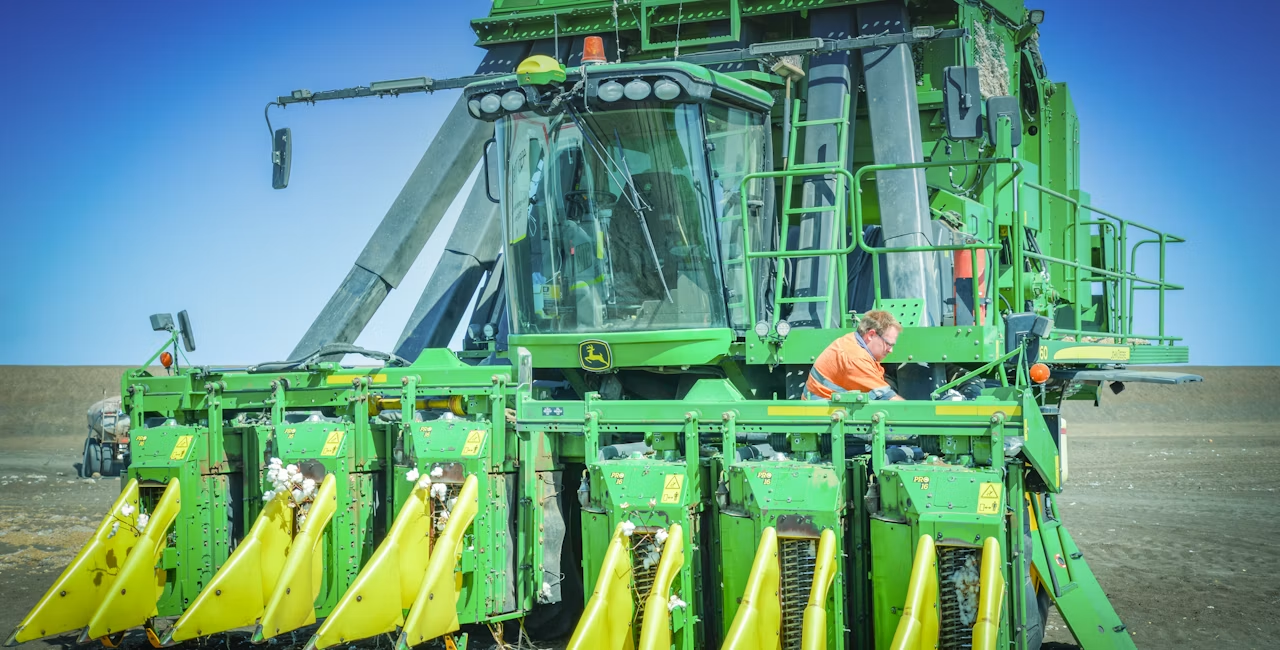
Digital platforms like Agworld are accelerating this shift. Not by adding more work, but by making everyday work more valuable. Planning, spraying, irrigating, harvesting, these activities become structured, shareable records. Over time, that creates a complete, connected view of the farm. And, it’s not just one person that has to create the records: between farm staff, contractors, agronomists and other partners, everyone contributes every time they do a job and log their information in Agworld.
This isn’t about becoming a data-driven business overnight. It’s about taking practical steps now that compound over time, creating primary data to use for multiple secondary purposes and putting systems in place that future-proof your operation. The payoff is real: better conversations with agronomists, faster decisions, easier compliance with programs like MyBMP, and stronger positioning with buyers, banks and other partners who increasingly want to understand how cotton is grown.
No one enjoys investing in infrastructure they might not fully use straight away. Bigger diesel tanks don’t increase yield on their own. Neither do digital records. But both are about preparedness, and preparedness is what separates reactive businesses from resilient ones. The cotton industry has always been good at adapting, and this is the next step.
The growers building their data capability now will be best positioned for whatever comes next, and ready to take advantage of it. Diesel taught us a lesson this year. With data, we have the benefit of acting on it early. Because when the moment comes where data really matters, and it will, you won’t be trying to catch up. You’ll already be ahead.
This article was first published in the Australian Cotton Grower Magazine