If you’ve bought a new phone in the last few years, you’ve probably experienced “zero-touch” without ever knowing the term. You turn the device on, it recognises your account, pulls down your settings, installs your apps, and by the time you’ve made a coffee it’s ready to go. No manual configuration, no re-entering the same information twice, no IT department standing over your shoulder. The whole point of zero-touch technology is that the value gets delivered without anyone having to do the boring bit in the middle.
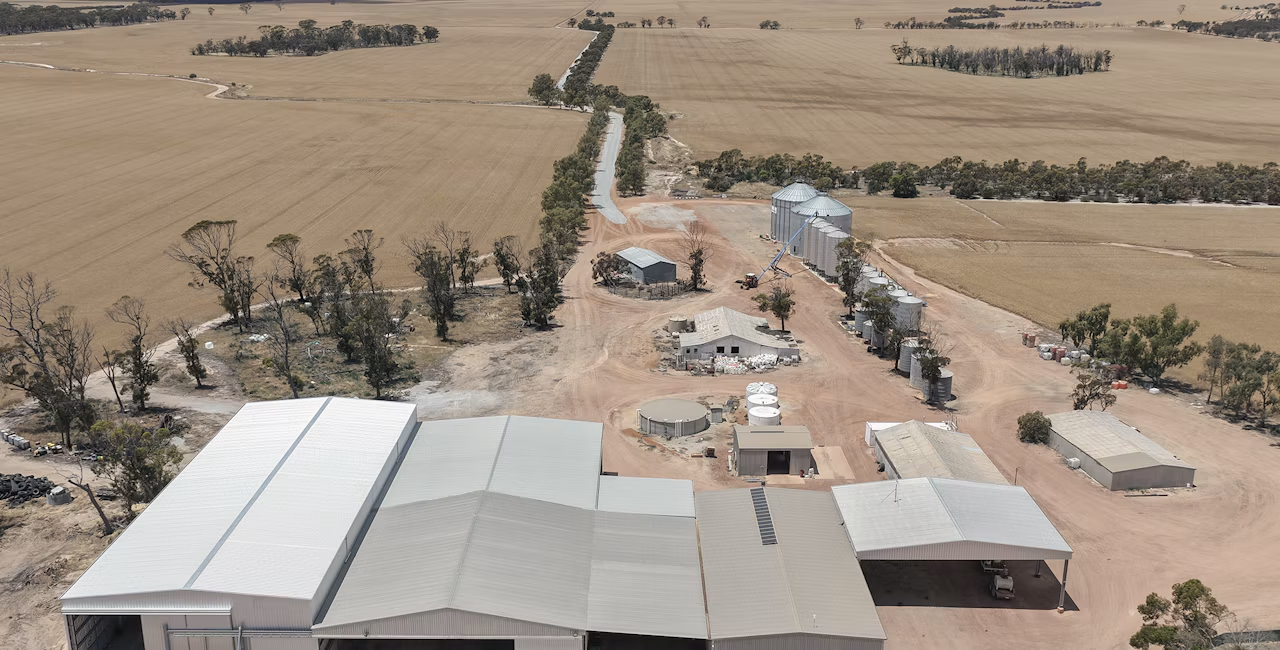
I recently caught up with Ceri Coetzer, who wears more hats than most of us could keep track of across Bungulla Farming, Taurus Aviation and Origo.ag weather stations in Western Australia’s wheatbelt, to talk about what zero-touch looks like when it’s applied to farm business records. And the more we talked, the more it became clear that the analogy holds up all the way through operations, compliance, finance and procurement.
From clunky to invisible
Before Bungulla connected Agworld with FarmReady’s Shed and Cart, the process of turning a spray recommendation into a finished, auditable record was, in Ceri’s words, “always trying to remember.” An agronomist would write a recommendation, someone would convert it into a work order, and the boom spray operator would do the job. Then at some point, if everyone remembered, that job would be converted into an actual, chemical usage would be tallied, and stock levels would be adjusted by hand.
Now the loop closes itself. A recommendation becomes a work order in Agworld, flows through to the John Deere Ops Center-connected sprayer and, once the job is done, it round-trips back into Agworld as a completed actual: time and date stamped, weather readings attached, and the exact chemical volume taken straight out of inventory in Shed. As Ceri put it, “it’s actually gone from a very staggered process… to the point where I go, ‘has that work order even been done?’ And it’s like, ‘oh yes, it has.’” That’s the zero-touch test: the outcome exists before anyone has to chase it.
Operations: decisions made in the field, not the office
The flow-on effect for day-to-day operations is that information stops living with whoever happened to do the job. Farm managers and owners get what Ceri calls “an overarching view of what’s going on” without walking down to the chem shed for a physical count. When an agronomist and Ceri’s colleagues are out in the field and make a crop management decision, they’ve got exact quantities-in-stock in the palm of their hand, and they can make the call on the spot instead of guessing.
Paraquat handling is a great example. With a closed system, a work order for a set volume pulls that exact amount from Shed automatically; no manual measuring, no spill risk, no gap between what was drawn and what was logged. Multiply that across every chemical, every weather reading, every Label / SDS reference, and what you get is a compliance trail that was never “prepared for” an audit, because it was built the moment the work happened. As Ceri told me, that record is there “for audits, bank managers, brokers, owners who may operate from afar”, at a click of a button - not a scramble beforehand.
Finance and procurement: knowing what you’ve got, before you need it
The same automation that satisfies an auditor also sharpens a buying decision. When stock-on-hand is precise rather than approximate, Ceri points out you can “swap a product out for chemicals you have on hand already” instead of ordering something you didn’t need, or capitalise on bulk buying because levels are visible in real time rather than discovered too late. On the grain side, Cart has replaced the harvest-time spreadsheet Bungulla used to run: deliveries, contracts, silo transfers and truck movements are now reconciled against header yields and scale weights, so a call about grain prices can be answered with a number instead of a guess: exactly how much is in the ground, in the shed, and ready to sell.
Ask Ceri what zero-touch records have actually bought Bungulla, and the answer isn’t a system feature, it’s hours. “It takes the monotony out of the day-to-day and it just instills the confidence that it’s working, it’s right.” Bungulla owners Kate and Brad Jones now pass more of the daily detail through to management, because they trust the numbers without checking them first. That’s time spent with staff, with family or in the field, instead of behind a keyboard. Zero-touch was never really about the device, or the record. It’s about designing the system so the useful thing, the finished job, the compliant record, the accurate stock count, arrives on its own, and the person who used to chase it gets their day back instead.