When you’re creating a spray record, weather matters. Temperature, humidity, wind speed and direction, and other conditions provide important context around an application and form an essential part of maintaining complete records. The challenge for growers and spray rig operators is that capturing this information can add another manual step to an already busy workflow. Even when you have a weather station on-farm collecting accurate, local information, someone still has to go find that data and manually enter it into the spray record.
Agworld’s auto-weather functionality is designed to make this easier. By bringing weather data into the same platform where growers are already managing their field activities, Agworld can automatically populate weather information when creating spray records. It’s a simple example of how connecting farm data can remove repetitive work and help growers maintain more complete records without adding more administration.
Putting local weather data to work
Agworld’s auto-weather feature models weather observations for recorded activities based on various weather data sources available for the farm’s location. This means modelled information such as temperature, humidity, wind speed, wind direction and Delta T can be populated directly into a spray record, rather than requiring the user to find and enter each observation manually.
For growers, the benefit goes beyond saving a few minutes of data entry. Weather conditions can vary considerably between locations, so being able to use information from a weather station located on or near the farm provides locally relevant context for what was happening when an application took place. At the same time, automatically bringing this information into Agworld makes capturing weather a more consistent part of the record-keeping process.
Good spray records are valuable for more than compliance; they create a reliable history of what happened in each field and allow growers, agronomists and other connected users to refer back to this exact information when required. By automating more of the information that goes into these records, growers can spend less time entering data into systems while maintaining a clearer picture of their field operations.
Connecting the weather stations already on-farm
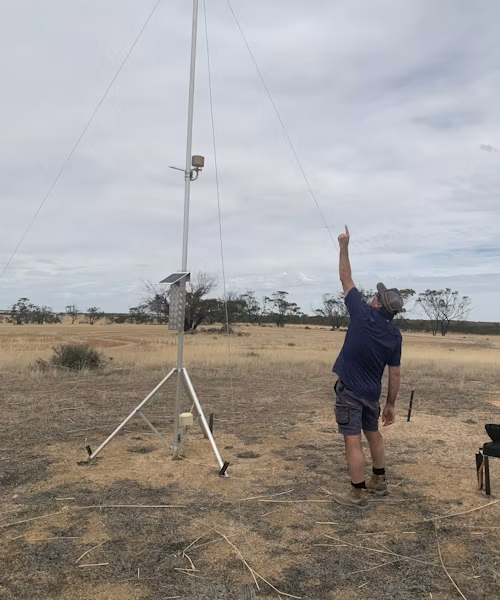
The value of auto-weather becomes even greater when Agworld connects directly with the weather stations growers already use. Agworld currently supports integrations with weather station providers, including Origo and Davis, allowing on-farm data to become part of the Agworld workflow rather than remaining isolated on another platform.
Once a supported weather station is connected and mapped to the relevant farm, its observations can be used by Agworld when populating weather information for field activities. This is part of a broader focus at Agworld: helping information flow between the different technologies used across a farm so that data can be useful where and when it is needed, rather than requiring growers to continually transfer it themselves.
More weather integrations are coming
There are many different weather station systems operating across Australian farms, and we want more growers to be able to put their local weather data to work in Agworld. That’s why we’re continuing to expand our weather integrations, with support for additional providers planned.
Already have a weather station you’d like to connect to Agworld? We’d like to hear from you. Let us know which weather station provider you use and would like to see integrated next. Your feedback will help us prioritise future integrations and make it easier for more growers to automatically bring local weather data into their Agworld records.