
Problem
Running a large-scale high-country farming operation in Central Otago requires clear visibility across land, livestock, and people. At Matakanui Station, much of the operational knowledge lived in notebooks, spreadsheets, and people’s heads. While this worked historically, increasing compliance requirements and operational complexity made it difficult to confidently track what had been done and where. Information was fragmented, and reviewing past decisions or responding to questions took time. The team needed a simpler, more consistent way to manage records and day-to-day operations.
Solution
Matakanui Station adopted Agworld to centralise planning, task management, and recordkeeping across the business. By moving field records, observations, and all other information into a single platform, the station created one shared source of truth for the entire team. Information could now be captured in real time, directly from the field, and accessed by anyone who needed it. Agworld became the backbone for operational visibility, helping the team stay aligned and organised.
Result
With Agworld in place, Matakanui Station has improved clarity, consistency, and confidence across its operations. Records are easier to maintain, compliance reporting is less stressful, and staff have a clearer understanding of what needs to be done and when. Decisions are now supported by accurate historical data rather than memory alone. The station has reduced time spent chasing information and increased confidence in its reporting. Agworld now supports both day-to-day management and long-term planning.
Managing scale in a high-country environment
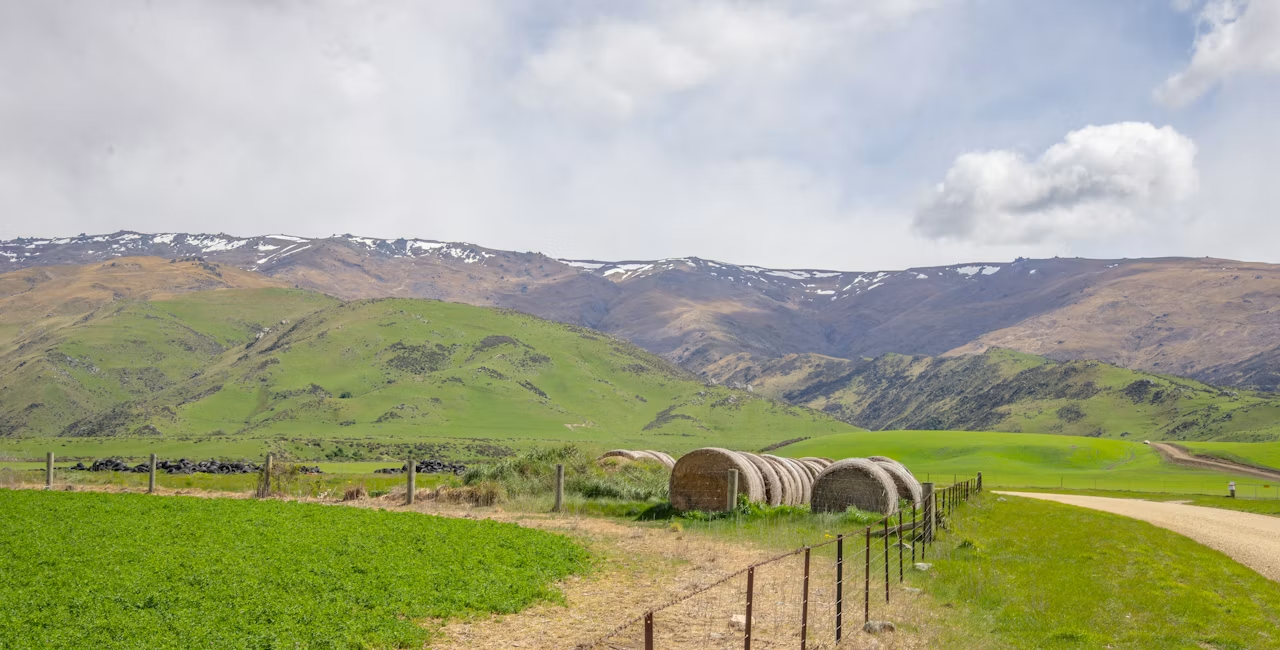
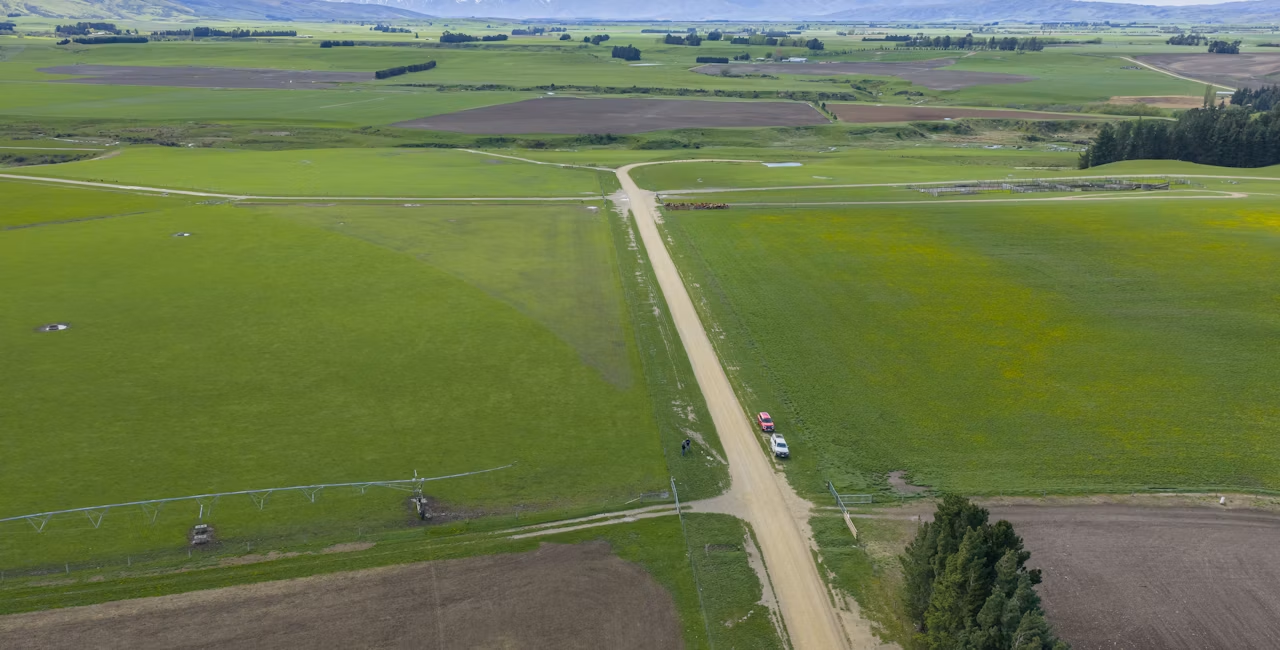
Matakanui Station operates in the demanding landscape of Central Otago, where scale and environment shape every decision. Large fields, variable conditions, and seasonal extremes require careful planning and strong operational discipline. As Station Owner Andrew Paterson explains, the challenge isn’t necessarily doing the work, it’s keeping track of it across such a large operation: “We’re covering a lot of ground and different elevations, rising to 5,000 feet on the Dunstan mountains, and historically a lot of that information just lived in notebooks or in someone’s head. If you weren’t the one who did the job, it could be hard to know exactly what had happened and when.”
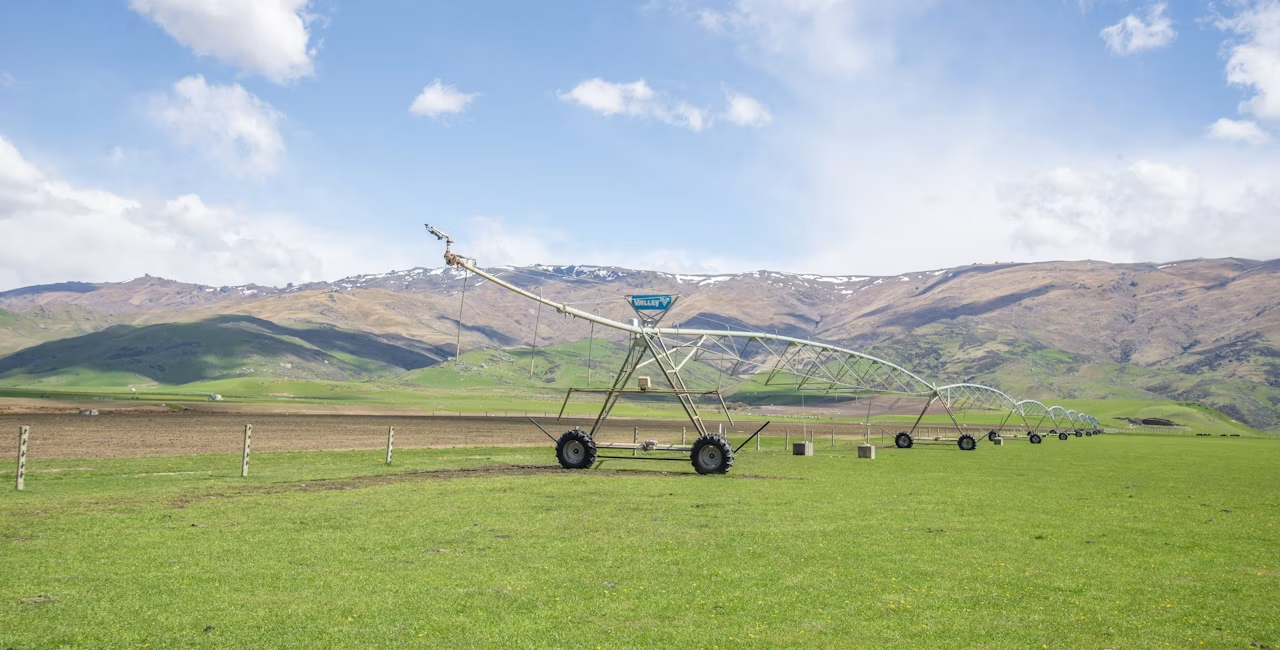
With multiple people involved in grazing management, fertiliser decisions, and general farm operations, relying on memory created risk. Looking back at what had been done in a field, or explaining it to someone else, wasn’t always straightforward.
Before Agworld, recordkeeping at Matakanui Station was largely manual. Notes were written down, spreadsheets updated when time allowed, and information shared verbally. While this approach had worked for years, it became harder to manage as expectations around documentation increased. “You’d write things down, and you’d think you’d remember it later, but six months down the track, you’re trying to piece it all together again,” Andrew says.
This made compliance and reporting more time-consuming than it needed to be. When questions came up, whether from advisors, auditors, or within the team, answering them often meant digging through multiple sources. Introducing Agworld changed that dynamic. Instead of information being scattered, everything was captured in one place. Andrew: “Having all information in one system means you’re not trying to remember where something was written down, you can just look it up. We need to have proof of placement for all our inputs and records to prove exactly what we’ve done, how much fertiliser we’ve put on at which date, etc.; Agworld offers us exactly that.”
Andrew continues: “We started our digital record-keeping journey by adopting Mobble back in 2019 for the livestock-side of our business. We like Mobble as it’s simple, affordable and our staff enjoy using it, so it was easy to implement. Once we had our livestock record-keeping at the level we needed it to be, we started looking at our cropping records and realised we needed a similar program there. After finding out about the integration between Mobble and Agworld, the choice to start using Agworld was pretty easy!”
“As soon as we started using Agworld we found a local agronomist that uses Agworld , which made it even easier as he creates recommendations for us in Agworld so we can see exactly what we need to do and then turn these recommendations into actual records on our side. Now that we’re a bit more advanced in our use of Agworld, we have started to use Shed by FarmReady for our chemical inventory management as well, which is really useful because we know exactly how much of each product we have in stock at all times.”
Creating a single source of truth
One of the biggest shifts for Matakanui Station was having a single source of truth for fields and activities. Once information is entered into Agworld, it becomes accessible to everyone involved in the operation, says Andrew: “If someone’s been in a field and logged what they’ve done, everyone else can see it. There’s no second-guessing.”
This visibility reduces the need for constant check-ins and follow-up conversations. Instead of asking around, staff can simply check Agworld to see what has been completed and what is still outstanding. This also improves accountability; tasks aren’t just planned, they are recorded as completed, creating confidence that nothing is missed.
Like many New Zealand farming businesses, Matakanui Station operates under growing regulatory oversight. Accurate records are essential, but maintaining them manually can be burdensome. Agworld helped the team at Matakanui shift compliance from a reactive task to a natural part of daily work. “Instead of trying to recreate things after the fact, it’s already there in Agworld because you’ve recorded it as you go,” Andrew explains.
This approach reduces stress and saves time. When information is needed, it can be accessed quickly without disrupting day-to-day operations. Andrew: “Having all our records up-to-date in Agworld takes the pressure off of us. You’re not scrambling to pull information together at the last minute; it’s already done before you even need it.”
Better conversations, better decisions
Beyond recordkeeping, Agworld has improved the quality of conversations within the business at Matakanui Station according to Andrew, with accurate historical data available, decisions can be based on evidence rather than assumptions: “You can look back and see what’s actually happened in a field over time, not just what you think happened.” This has been particularly valuable for reviewing past decisions and planning future work. Instead of starting from scratch each season, the team can build on what they already know, says Andrew: “Having your data in Agworld gives you confidence in the decisions you’re making, because you’ve got the information to back it up.” One concern when introducing new technology is whether it will add complexity. For Matakanui Station, the opposite has been true according to Andrew: “Implementing record keeping systems like Agworld and Mobble actually simplified things. We’re not doubling up on records anymore but instead we just do it once and do it properly. “If you do it when you’re in the field, it’s one and done. You don’t have to remember to come back and write it up because it’s already in Agworld,” according to Andrew, “this reduces duplication and improves accuracy.”
For Matakanui Station, Agworld has become more than a recordkeeping tool. It’s a platform that supports how the business wants to operate: clearly, efficiently, and with confidence. Andrew: “It’s about knowing what’s happening across the whole station without having to chase people or paperwork, which is what Agworld offers us.”
As the station continues to evolve, having reliable data and a clear operational picture will remain critical. Agworld provides that foundation, supporting both immediate decision-making and long-term planning.“When all information is in one place, it makes managing a large operation a lot easier,” Andrew concludes.
